Single-Zone vs. Zoned Booster Pump Systems
An optimized high-rise water-pressure boosting design can reduce excessive pressure and energy waste. A zoned booster solution can match pressure to demand in each zone and improve system efficiency.
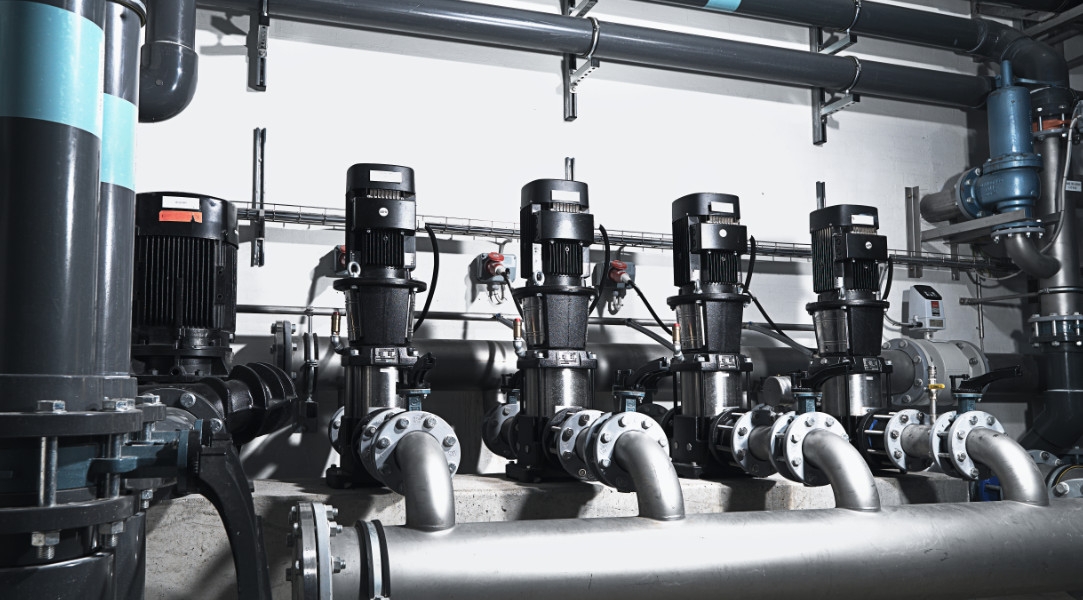
Designing an optimal water-pressure boosting system
The challenge
To maintain stable water pressure, high-rise commercial buildings face two main challenges. First, the incoming mains pressure is rarely sufficient to supply the entire building. Second, water demand changes continuously. Break tanks are often installed to provide water storage, but this makes booster pumps essential because the stored water must then be pressurized and distributed to different users.
A booster system therefore needs not only to be reliable but also intelligent enough to maintain the required pressure regardless of consumption. A single-zone booster system, however, can create unacceptably high pressure on lower floors. When this occurs, costly pressure reducing valves are required, wasting energy by dissipating pressure that was created by the pumps.
The solution
The right pressure-boosting design depends on building height and the load profile. In most cases, a zoned system in which multiple booster sets serve their own pressure zones provides the most efficient solution. Zoned boosting avoids introducing more pressure into the system than each zone actually requires.
This means the building can maintain consistent water pressure on all floors without wasting energy, even when demand fluctuates. A zoned approach also provides redundancy through multiple booster sets and allows the system to adapt to changing consumption.
31.5% lower energy consumption
Single-zone versus zoned boosting: a calculation
How significant is the benefit of choosing an intelligent system? A comparison was made between two booster-system designs for a 20-storey hospital.
Grundfos Product Center was used to size the booster application for an 800-bed hospital with annual water consumption of 300 m³ per bed. Permitted tap pressure was 2.5-4.0 bar, while building height and floor-to-floor height were 80 m and 4 m respectively. With 60% of water consumption occurring on the lower floors, a single booster system consumed 106,530 kWh/year. The zoned solution used only 72,937 kWh/year, a reduction of 31.5%.
Use Grundfos Product Center for product sizing.
Smart solution: a zoned system
Single booster system
The simplest way to achieve similar tap pressure on every floor is to generate excess pressure and then reduce it.
A single booster set supplying an entire high-rise building produces a large pressure difference across the system. The basement booster station must generate enough head to overcome system losses and reach the top floor, but this means pressure on lower floors can greatly exceed acceptable limits. Pressure reducing valves must then be installed to remove the excess pressure. In other words, the system requires additional components while simultaneously dissipating pressure that energy was used to create.
Zoned booster system
A smarter approach is to generate only the pressure required in each zone—no more and no less.
By dividing a high-rise building into booster zones, the required flow and pressure can be defined for each zone. Each booster set can then be sized in Grundfos Product Center to match that specific demand. When every booster operates at the speed actually required, the energy benefit is clear: energy is no longer wasted reducing excessive pressure, and each booster follows the load profile of its own zone. Intelligent booster sets adapt to demand, eliminate the need for pressure reducing valves in the same role and help maintain reliable, efficient operation.
Source: Grundfos Vietnam